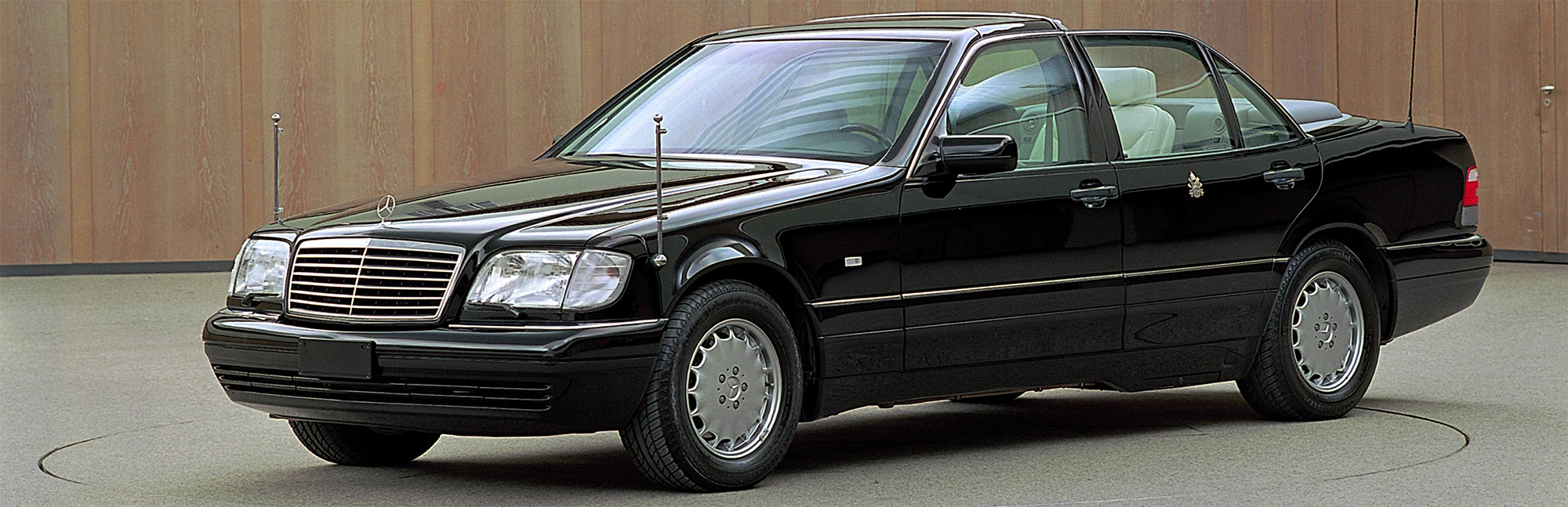
The Mercedes W140 “King of the Road for the Nineties and beyond”
This article is written by a couple of Owners of the model for some years and will be as unbiased as possible dispelling myths and rumour surrounding the model.
So why write an article you may say? The reason is simple this car model has been maligned and regarded as an over-engineered tank for a long time, and it is time to put this in perspective alongside other cars and also models of Mercedes-Benz.
This was a car of “Firsts” in terms of equipment and engineering, without which modern day cars would not have half of the gadgets, safety features etc. that they do. This is conveniently forgotten when discussing W140.
Mercedes-Benz, through trade sources, had got wind of the fact that BMW, one of their largest competitors, were planning the, what became the ‘7 series and in addition were developing a V12 engine for the top end models.
At the time there was a lot of competition at the upper end of the luxury car market and Mercedes-Benz took it upon themselves to try and outshine the competition by designing and building something that was “special” and it a league of its own, particularly demonstrating that they could compete with the likes of Rolls-Royce and Bentley in the luxury sector.
The Chief designer, as is well documented, was Bruno Sacco (well known for the W126) who as far back as 1981 began the design which included several different design proposals studied between 1982 and 1986. A definitive design proposal was selected in December 1986. Early 1987 Engineering prototypes were tested. September 1987: The final exterior design was locked in. February 23, 1988 (West Germany) / August 23, 1988 (US): Design patents were filed. 1991: The W140 was officially introduced.
He had wanted the entire car to have 100mm lower roofline, but was overruled by engineering.
Much is written about Bruno Sacco but what is not well publicized is that he had 3 basic principles around his style of work.
1. A Mercedes must always look like a Mercedes.
2. It should symbolize all the values that are the hallmark of an authentic Mercedes and that our customers expect of it.
3. The design should include as much innovation as possible while at the same time remaining true to the values of the brand.
It is highly important that both the driver and the passengers have the clear sensation of being in a
Mercedes once they are seated in any of our cars. This feeling is induced not only by the design but also by the finishing, the choice of materials, and even the tactile impact with interior surfaces. This way, it is not difficult for customers to establish a relationship of trust with the marque, especially in terms of
reliability and continuity.
The Model Range incorporated both Short and Long Wheelbase Petrol and Diesel Engine Saloons with Automatic and Manual Transmissions - the smallest engine being 2.8 litre and the largest V12 at 6 Litres, with 3.2 / 4.2 / 5 litres filling the gap. The coupes were given a different designation of C140 and were available only with 4.2 / 5 litre or 6 litre engines and Automatic Gearboxes.
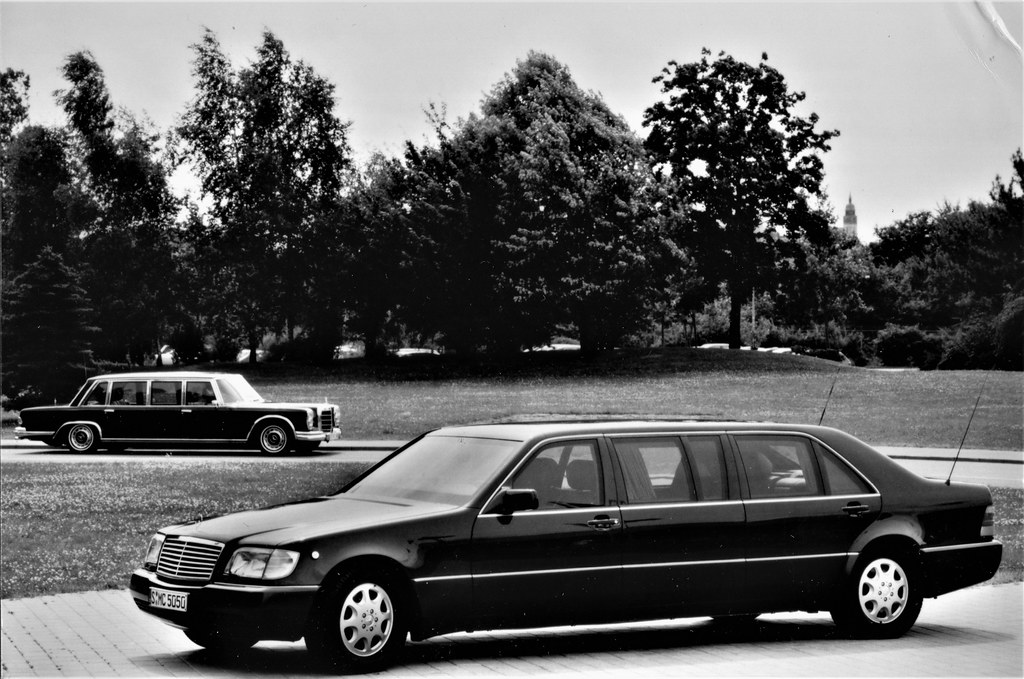
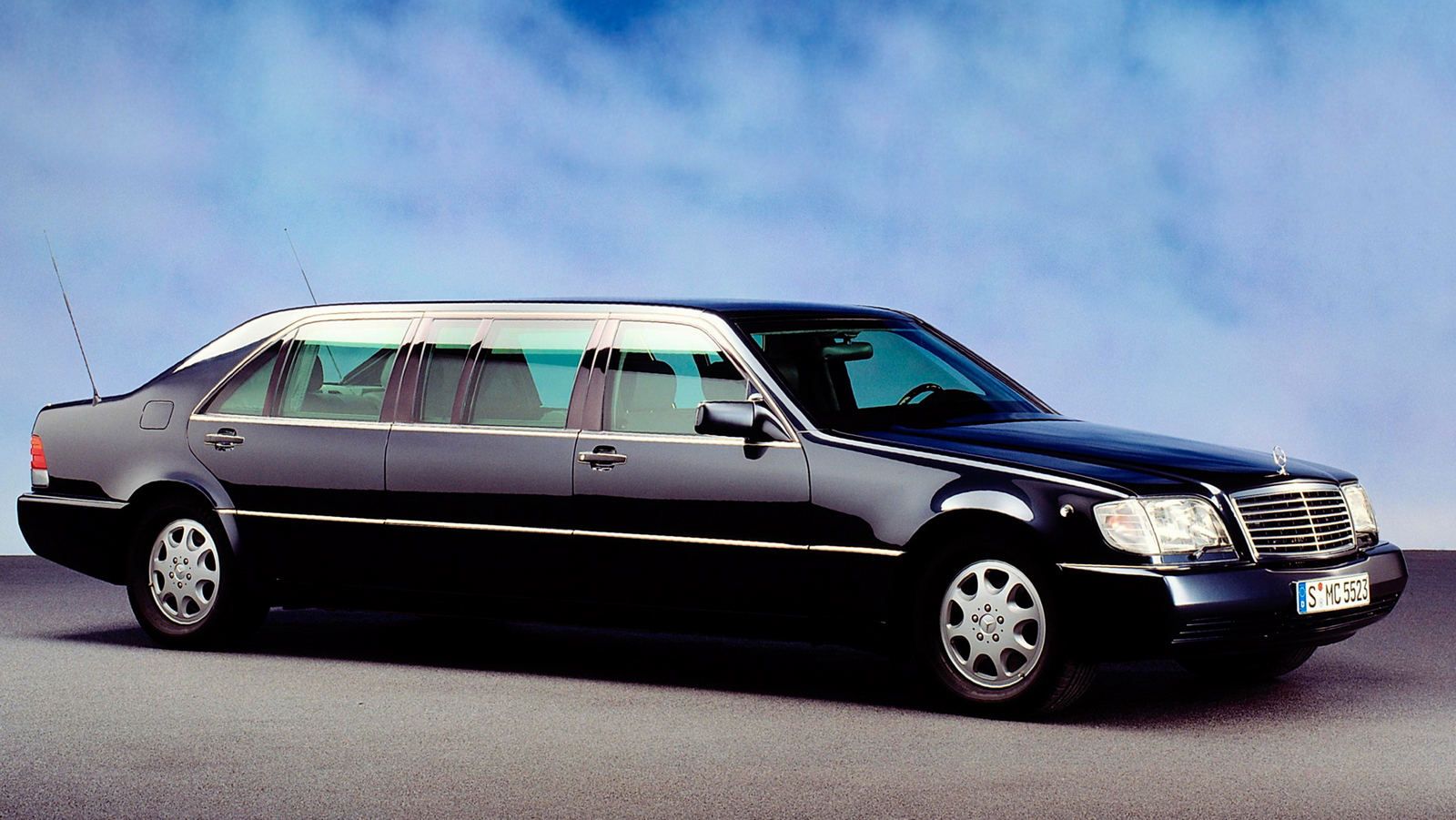
The Pullman was a stretched version of the normal LWB W140 with 4 doors & six seats. It had luxuries such as a glass partition between the front & rear passengers, it had curtains, walnut trim, a stereo for the rear passengers, and leather seats that were all electrically operated amongst much else. The Pullman was also available with or without armoured plating.
Statistics for the numbers of each variant for each year of construction we have available for anybody that is interested and ask contact with us to obtain if wanted. (ADD IN AS PART OF GLOSSARY AT END)
The first production bodies of the Saloons were produced in May 1990; they were used in the last batch of prototypes. Pilot production began in October 1990. Series production began in March 1991. By August 1998, series production had ceased. In total, 406,720 Saloons were produced over 89 months, equivalent to about 4,570 per month, or 152 per day.
Comparatively the W126 (the W140’s immediate predecessor) was produced for a total of 12 years, producing 892,123 vehicles in total – 818,063 Saloons and 74,060 Coupés an average of approximately 6,195 cars per month / 203 cars per day
The first production body of the Coupé was produced in October 1991, pilot production began in July 1992, and series production began in November 1992. Series production ended with the sedan in August 1998. A total of 26,021 units were produced.
The first production bodies of the Guard (Armoured and Bullet Proof) were produced in October 1991, and serial production began in July 1992. In August 2000, production ended. 886 units were produced, including the Pullman with special protection. This variant was based on S500 and S600 models.
The W140 attracted more than any S Class before it with no less than a dozen Tuners - Customizers Coachbuilders who worked on this model some exclusively otherwise alongside other brands
Listed as follows:
Binz founded (1936) (German) (Made Estates)
AMG (German)
Carat Duchatelet founded (1968) (Belgian)
Renntech founded (1989) (German / American) (Hartmut Feyl 10 years with AMG)
Brabus (German)
Carlssonfounded (1989) (German) (Sold to Chinese in 2023)
Lorinser founded (1930) (German)
Waldfounded (1990) (Japanese)
MEC Design founded (1999) (German) - (Exhausts / Wheels / Body Kits)
Kleeman founded (1985) (Danish) - (Tuning Performance upgrades including W140 / ECU tuning / supercharger / Exhaust systems)
Trasco Bremenfounded (1983) (German) - (Concentrated on only stretching Limo's and armouring the cars)
Caro Intl GmbH founded (circa 1986) (German) - (Concentrated on only stretching Limo's and armouring the cars). Exact date of foundation of the Company not stated.
Note the Landaulet W140 was a one-off in-house build by Mercedes-Benz for Pope John Paul II in 1997 based upon an S500 LWB.
W140’s from TRASCO BREMEN, one of the most important German tuning companies of the 1990s, Trasco was known for stretching and armouring the S-Class, and they once claimed they had better protection than factory Mercedes. They have valued customers all over the world. However, Trasco never collaborated with Mercedes-Benz and therefore fell behind on some important projects.
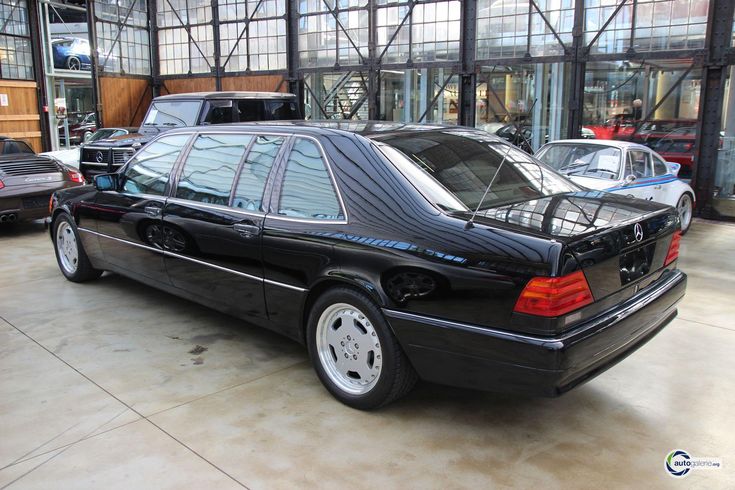
Duchatelet is considered the more advanced brand in this segment.
Carat Duchatelet became a subcontractor for Mercedes-Benz and developed the S600 Pullman six-seat stretch limousine along with the Stuttgart manufacturer, with a long insert from the B-pillar back that bought an extra row of rear-facing conference-style seats for the interior. The S600 Pullman was a popular model with heads of state at the time, and in armoured form it tended to cost well over a million dollars. But Carat Duchatelet also made a smaller W140 stretch limousine, where instead of an inserted section after the B-pillar, the rear doors themselves were completely redesigned, and a third side window was added to the C-pillar.
This labour-intensive construction was a complex exercise in coachbuilding, and it yielded a very stealthy personal limousine that was unlike anything that was on the market at the time, save for bespoke limousines made by Mulliner Park Ward based on Rolls-Royce chassis. In some ways, the shorter Carat Duchatelet personal limousine was a more complex car to build than the Pullman, due to this configuration.
Some versions of the W140 stretch by Carat featured rearward facing conference seating, a slightly more snug version of the layout in the W140 Pullman.
The Carat Duchatelet W140 limousine was stretched by 23.6 inches and featured much longer rear doors manufactured from scratch. The original door shut lines themselves were altered, and a new door frame was created. Customers could choose a relatively unaltered interior layout with executive seats for the back or one with a partition between the driver and the rear passenger compartment. The inclusion of the partition meant that interior space suffered a bit, though it also meant that a specially created dash could be added to the interior, featuring a number of amenities for the rear-seat passengers.
Carat offered this type of limousine with B6-/B7-level ballistic protection, which means that it could withstand multiple hits from NATO 7.62x55mm armour piercing rounds, identical to the level of protection provided in the larger Mercedes-Benz S600 Pullman. Just for reference, there is not a higher level of ballistic protection standard than B7 available for passenger-armoured vehicles based on mass-market automobiles.
The Carat Duchatelet W140 stretch competed with the factory BMW L7, which was a slightly less complex personal limousine that featured a short inserted section after the B-pillar. The L7 also offered a partition window, but its slightly shorter overall length did not offer two extra jump seats.
Ultimately, just a couple of dozen of Carat's W140 stretch limo’s were built. The company's finely crafted machine lost out to cars that were either standard-wheelbase armoured Saloons or stretched six-passenger models like the Pullman that Carat helped develop for Mercedes-Benz.
While other coachbuilders like Brabus Caro and Trasco-Bremen built stretch models based on the W140 chassis, their cars featured relatively simple additions like that of the BMW L7.
Carat Duchatelet's W140 mini-stretch evoked the design Mercedes-Benz 600.
Carat Security Group continues to build armoured cars and limousines based on Mercedes-Benz, Bentley, Rolls-Royce and other chassis into the present day, though it hasn't produced a personal limousine similar to the W140 of the mid-1990s. The design was never followed up on with the next-generation S-class.
Having previously mentioned that this was a car of “Firsts” the following list of features clearly demonstrates the innovative thinking that was going in inside Mercedes-Benz at the time
M120 Engine -– this engine went on the be chosen by Pagani for their Zonda Supercar – another First!
The engine was re-engineered by AMG to procure the 7 and latterly the 7.3 Litre engines
Safety:
Electronic Stability Program (ESP):
The W140 was among the first production cars to feature ESP (Electronic Stability Program), a system that helped prevent skidding and improved vehicle stability.
Brake Assist System (BAS)
Engaged during emergency maneuvers to boost braking power to maximum. This innovation was part of the Facelift program that started in late Autumn of 1995
Parktronic:
This sonar-based system, introduced in later models, helped drivers gauge the distance of the car from obstacles when parking.
Side Airbags:
The W140 also featured side airbags, even in the rear passenger cabin a significant safety innovation at the time.
Automatic Rain-Sensing Wipers:
These wipers automatically adjusted their speed based on the amount of rain detected, a convenience feature that would become more common later on.
Heated Windshield Washer System:
This feature prevented the washer fluid from freezing in cold weather, ensuring clear visibility.
Comfort and Convenience:
Double-Paned Soundproofed Glass: This feature significantly reduced cabin noise, enhancing the driving experience.
Electrically Operated and Folding Exterior Mirrors:
These mirrors could be folded in by switch, making it easier to manoeuvre in tight spaces.
Soft-Close Doors and Boot:
These features ensured a secure and quiet closing of doors and the trunk.
12-Way Power-Adjustable Heated Front Seats:
These seats offered a high degree of adjustability and comfort, with memory settings and lumbar support.
Automatic Dimming Mirrors:
Both the interior and driver's side exterior mirrors automatically dimmed to reduce glare from headlights.
Auxiliary Heating System: As in trucks a Night heater control that worked once the Ignition was turned off
Offline Heating System: The airflow at last set temperature continues to flow for 20 minutes once the ignition key has been extracted
3 Independent areas for Temperature control in the cabin: One each for Driver and front seat Passenger and one for Rear-Seat Passengers. The temperature selected at the front was the same for rear seat passengers, however there was an option to install manually operated Dual-Zone Air conditioning thus achieving 4 zone Climate Control
Adaptive Damping System (ADS):
ADS adjusted the shock absorbers to provide optimal ride comfort and handling in various driving conditions.
Being the ’90s, the S-Class was one of the first cars to have the ability to have factory fitted Phones
Other Innovations:
The First Mercedes-Benz car to Have Xenon Headlights
Parameter Steering:
This system reduced steering effort at low speeds, making parking and manoeuvring easier.
Rear Parking Poles/Sensors: These guide rods extended from the boot lid to aid in parking, a precursor to the later Parktronic system. These were taken away and substituted by Parking sensors in the bumpers with the Facelift.
Linguatronic Voice Control:
This feature allowed drivers to control some vehicle functions using voice commands.
GPS Navigation:
The W140 saw the debut of GPS navigation in a Mercedes-Benz vehicle.
Improved Anti-Corrosion Measures:
These measures helped to extend the lifespan of the vehicle, which is why many W140s are still on the road today.
The W140's innovations not only set a new standard for the S-Class but also influenced the entire automotive industry, with many of its features becoming standard in modern vehicles.
The ‘W140’ came in 4 different body styles.
These consisted of a ‘SWB’ Saloon, a ‘LWB’ Saloon, a stretched limo-esque saloon called the Pullman & a 2-door Coupé known internally as the ‘C140’. Wheelbases varied from 119.7 inches for the ‘SWB’, 123.6 inches for the ‘LWB’, 115.9 inches for the ‘C140’ & 163 inches for the Pullman.
Even from the start of production, the W140 was a car that had no care for a budget.
Mercedes-Benz wanted it to be the best of the best and they went out to prove that. As mentioned, it took 10 years of R&D just to create the legend that is the W140 in its entirety but with the Pullman that went a step further. Just like the 600 Pullman that came before it, this was a stretched version of the normal LWB W140 with 4 doors & six seats. It had luxuries such as a glass partition between the front & rear passengers, it had curtains, walnut trim, a stereo for the rear passengers, and leather seats that were all electrically operated amongst much else. The Pullman was also available with or without armoured plating which is vital considering the people that owned these cars when new.
On the subject of owners, the W140 had a high calibre of owners. these included top F1 Driver - Michael Schumacher, Madonna, Penelope Cruz, Jack Nicholson & The Sultan of Brunei to name a few.
During the 90’s, the W140 was the US Rappers choice of car and these included Tupac ‘2Pac’ Shakur, Curtis ’50 Cent’ Jackson and many more.
The W140, just like the 600 Grosser was also a firm favourite of being owned by dictators and numerous Gangs / Mafia’s. These included the Yakuza, the Russian Mafia, Vladimir Putin, Kim Jong-Un’s predecessors & the Albanian Mafia.
Even the Board Members of Mercede-Benz owned a W140.
For Interest’s sake the Sultan of Brunei, who was very taken by this car, commissioned a series of special Mercedes-Benz W140 S-Class vehicles. Specifically, he ordered ten Mercedes-Benz S 73 T station wagons, modified by AMG, with a 7.3-liter V12 engine. While he initially ordered fifteen, only ten were ultimately delivered
In his stable of W 140’s otherwise, were 36 AMG 600 SEL's 70 AMG 600 SEC's. The Sultan's Total collection was 7,000 Cars as of late 2023.
On the Technical side the model range is laid out in the table below for ease of reference, but before getting to it let us mention that the early so called “Preface” models i.e. those built between 1991 until late 1995 had 5 speed Manual and Electronically controlled Automatic Gearboxes with Badging a number designation first followed by letters showing if long or short Wheelbase.
The Whole Range was given a “Facelift” starting in the late Autumn of 1995
Exterior:
- Tail lights: The facelifted W140 featured redesigned taillights with a more angular, clear lens design.
- Grille: The front grille was subtly modified, with a slightly more refined appearance.
- Side Mirrors: Electrically folding exterior mirrors were introduced, aiding manoeuvrability in tight spaces.
- Parktronic: The original rear parking markers (extendable rods) were replaced by the Parktronic system, which used sonar to detect obstacles and assist with parking – sensors being built into the bumpers front and rear.
- Climate Control: The climate control system was upgraded to a more advanced, possibly digital, system with separate controls for driver and passenger.
- Seat Adjustments: 12-way power adjustable heated front seats with memory functions and lumbar support were introduced.
- Rear-view Mirror: A manually operated auto-dimming interior rearview mirror was added, which could be tied into the seat and steering wheel memory functions.
Other Upgrades:
- Xenon Headlights: Xenon HID headlights were offered, providing brighter and more efficient illumination.
- Rain-sensing Wipers: Later models included rain-sensing windshield wipers, further enhancing convenience.
- Heated Washer System: The windshield washer system was also heated, preventing freezing in cold weather.
- The gearboxes were upgraded to 5-speed manual.
- The Badging was also changed to a prefix of ‘S’ followed by a number to show the engine size.
Table of Models
|
Model |
Chassis |
Years |
Configuration |
Displacement |
Power |
|
|
Petrol engines |
||||||
|
300 SE 2.8 |
W140.028 |
02/1992 05/1993 |
(M 104 E 28) Inline 6 |
2799 cc |
142 kW (193 PS; 190 bhp) |
|
|
S 280 |
06/1993 09/1998 |
|||||
|
300 SE |
W140.032 |
09/1991 05/1993 |
(M 104 E 32) Inline 6 |
3199 cc |
170 kW (231 PS; 228 bhp) |
|
|
S 320 |
06/1993 09/1998 |
|||||
|
300 SEL |
W140.033 |
01/1991 05/1993 |
||||
|
S 320 Long |
06/1993 09/1998 |
|||||
|
400 SE |
W140.042 |
04/1991 05/1993 |
(M 119 E 42) V8 |
4196 cc |
210 kW (286 PS; 282 bhp) |
|
|
S 420 |
06/1993 08/1998 |
205 kW (279 PS; 275 bhp) |
||||
|
400 SEL |
W140.043 |
04/1991 05/1993 |
210 kW (286 PS; 282 bhp) |
|||
|
S 420 Long |
06/1993 09/1998 |
205 kW (279 PS; 275 bhp) |
||||
|
S 420 Coupé |
W140.063 |
02/1994 08/1998 |
||||
|
500 SE |
W140.050 |
04/1991 05/1993 |
(M 119 E 50) V8 |
4973 cc |
240 kW (326 PS; 322 bhp) |
|
|
S 500 |
06/1993 08/1998 |
235 kW (320 PS; 315 bhp) |
||||
|
500 SEL |
W140.051 |
04/1991 05/1993 |
240 kW (326 PS; 322 bhp) |
|||
|
S 500 Long |
06/1993 09/1998 |
235 kW (320 PS; 315 bhp) |
||||
|
500 SEC |
W140.070 |
10/1992 05/1993 |
240 kW (326 PS; 322 bhp) |
|||
|
S 500 Coupé |
06/1993 09/1998 |
235 kW (320 PS; 315 bhp) |
||||
|
600 SE |
W140.056 |
04/1991 05/1993 |
(M 120 E 60) V12 |
5987 cc |
300 kW (408 PS; 402 bhp) |
|
|
S 600 |
06/1993 07/1998 |
290 kW (394 PS; 389 bhp) |
||||
|
600 SEL |
W140.057 |
04/1991 05/1993 |
300 kW (408 PS; 402 bhp) |
|||
|
S 600 Long |
06/1993 09/1998 |
290 kW (394 PS; 389 bhp) |
||||
|
600 SEC |
W140.076 |
10/1992 05/1993 |
300 kW (408 PS; 402 bhp) |
|||
|
S 600 Coupé |
06/1993 09/1998 |
290 kW (394 PS; 389 bhp) |
||||
|
Diesel engines |
||||||
|
300 SD |
W140.134 |
10/1991 05/1993 |
(OM 603 D 35 A, 12 valves) Inline 6 |
3449 cc |
110 kW (150 PS; 148 bhp) |
|
|
S 350 Turbodiesel |
06/1993 08/1996 |
|||||
|
S 300 Turbodiesel |
W140.135 |
06/1996 08/1998 |
(OM 606 D 30 LA, 24 valves) Inline 6 |
2996 cc |
130 kW (177 PS; 174 bhp) |
|
Specialist Car W 140 Guard 4 models (Armour plated and Bullet proof)
Mercedes-Benz 500 SEL / S 500 (LWB) Guard manufactured 1993 – 1998.
- manufactured by Mercedes-Benz in Germany
- 4-door sedan body type
- RWD (rear-wheel drive), automatic 4-speed gearbox
- gasoline (petrol) engine with displacement: 4973 cm3 / 303.9 cui, advertised power: 235 kW / 315 hp / 320 PS (ECE), torque: 470 Nm / 347 lb-ft,
- characteristic dimensions: outside length: 5213 mm / 205.2 in, width: 1886 mm / 74.3 in, wheelbase: 3140 mm / 123.6 in
- reference weights: base curb weight: 3485 kg / 7683 lbs, gross weight GVWR: 4100 kg / 9039 lbs,
- Top speed: 210 km/h (131 mph) electronically governed (declared by factory);
- accelerations: 0- 60 mph 10.1© s; 0- 100 km/h 10.7© s (simulation ©automobile-catalog.com); 1/4 mile drag time (402 m)
- fuel consumption and mileage: average estimated by a-c©: 19.6 l/100km / 14.03 mpg (European.) / 5.1 km/litre
Mercedes-Benz 600 SEL / S600 Guard manufactured 1993 – 1998.
- manufactured by Mercedes-Benz in Germany
- 4-door sedan body type
- RWD (rear-wheel drive), automatic 4-speed gearbox
- gasoline (petrol) engine with displacement: 5987 cm3 / 364.8 cui, advertised power: 290 kW / 389 hp / 394 PS (ECE), torque: 570 Nm / 420 lb-ft,
- characteristic dimensions: outside length: 5213 mm / 205.2 in, width: 1886 mm / 74.3 in, wheelbase: 3140 mm / 123.6 in
- reference weights: base curb weight: 3535 kg / 7793 lbs, gross weight GVWR: 4150 kg / 9149 lbs
- Top speed: 210 km/h (131 mph) electronically governed (declared by factory);
- accelerations: 0- 60 mph 8.6© s; 0- 100 km/h 9.1© s (simulation ©automobile-catalog.com); 1/4 mile drag time (402 m)
- fuel consumption and mileage: average estimated by a-c©: 22.1 l/100km / 12.45 mpg (European) / 4.5 km/litre
Total Numbers of W140 Models manufactured: 432,732 per Kittler, Eberhard (2001). Deutsche Autos seit 1990 [German Cars Since 1990] (in German). Vol. 5. Stuttgart: Motorbuch Verlag. ISBN 3-613-02128-5.
26,022 Coupes / 406,532 Saloons - 28,101 of them Diesel Saloons
The Legacy
The W140 is a car to be celebrated as the last of an era – the final engineers’ Mercedes-Benz, despite the reputation built through rumour / ignorance of being an over-priced over-engineered tank size wise. In our previous comment such that the Board Members of Mercedes-Benz themselves owned the car dispels the inaccuracy of the over-priced tank as they, like all of us, have the freedom of choice and would not have owned it if they did not think it was worth it.
Consideration should be given to the fact that dimensionally the car is no bigger than any modern-day Rolls-Royce or Bentley (now both owned by German Manufacturers VW) and that at the time of its production neither of these premium marques had the full range of innovations that the W140 had.
There was no other car being manufactured at the time that could lay claim to the “Firsts” we have referred to earlier in this article.
t remains a car with presence on the road and in the UK becoming more and more rare to see. It, more often than not, commands the respect of other car brand drivers as well as modern Mercedes-Benz owners, who have a vague idea of the technical marvels this car brought to the Motor Industry with many questions on the details which are not well known.
Hopefully, if you as a reader fall into either category, this article opens your eyes to the reality of what this vehicle is and why it is important to not only take note of it but to celebrate it in the history / annals of motoring.
This article is being written not only to give a comprehensive overview of the car but also to encourage those who have yet to experience the car from a driver’s perspective to try to do so and not to be scared off by again misplaced rumoured high running costs. By virtue of their age being in excess of 20 year the lower band Road Tax is applied – at time of writing £345 per annum in the U.K.
It is important to mention that you cannot own a car that cost £100,000 plus at time of production, It is unrealistic for one to purchase for say £5,000 and expect the maintenance and running costs to reflect a £5,000 motor car. This car is still a £100,000 car and upkeep costs will continue to reflect that.
Notwithstanding, the quality of the engineering is such that a full service is only required at 9-10,000 mile intervals thus spreading the cost versus an annual service required on other brands.
The Assyst program in built in the car will determine and dictate when the car is next due for a service.
Running Costs – Examples from Ownership
S600 LWB – Town Driving -between 9-14 mpg / Motorways 22-26 mpg depending on the grade of Fuel.
Note that 102 Octane fuel available in Europe yields about 4-5 mpg improvement over standard 99 Octane E5)
S320 SWB – Town Driving – between 12-15 mpg / Motorways the same as the S600 LWB
Insurance costs in the region of £270 - £500 per annum
Servicing only: Depending on whether a small or large service - £600 - £1,000 per service
For other work / parts provision between £1,000 – 2,000 per annum (Can you use new parts or are you lumbered with 2nd hand parts given that more and more parts are No Longer Available from Mercedes-Benz).